
Access Morris County Felony Records
Morris County felony records are kept by the District Clerk in Daingerfield and are public records that anyone can request by visiting the courthouse, sending mail, or searching online.
Morris County Overview
Morris County District Clerk
The District Clerk's office in Daingerfield is where Morris County felony records are stored and managed. This office files all case documents for the 76th District Court, which covers Morris County. You can look up cases by name or cause number, request copies of documents, and get certified copies of judgments. All district court matters, including felony criminal cases, are indexed and available for public inspection.
The courthouse is in Daingerfield, the county seat. Standard office hours are Monday through Friday, 8:00 AM to 5:00 PM. Call before visiting to verify hours around holidays or court days that might affect access. Copies cost $1 per page in Texas, and certified documents carry a $5 certification fee. Payment options vary by county but often include cash, money orders, and cards. Ask when you call.
Mail requests are accepted. Send the full name on the record, a cause number or approximate case year if you have it, your return address, and payment. The office will process your request and return what it finds. For urgent needs, an in-person visit or phone call will get a faster response.
The Morris County official website has contact information for the District Clerk, County Clerk, and other departments.
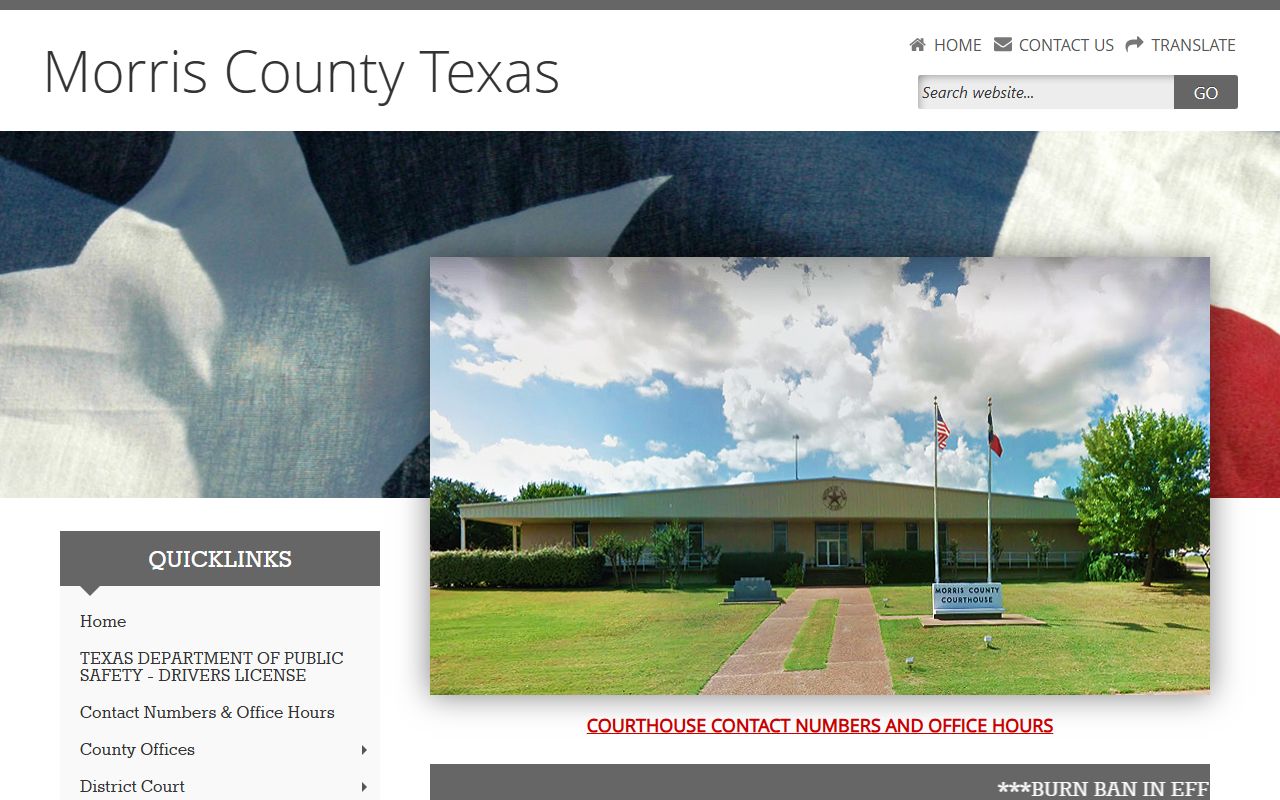
This site is the best place to get current addresses and phone numbers for county offices serving Morris County.
Felony Cases in Morris County District Court
The 76th District Court serves Morris County and a few neighboring counties in East Texas. It handles all felony criminal matters for the county. Cases run from state jail felonies for minor drug offenses to first-degree felonies for serious violent crimes. All court filings are public once entered into the court system.
Texas classifies felonies into five levels. Capital felonies carry life without parole or the death penalty. First-degree felonies are punishable by 5 to 99 years or life. Second-degree felonies bring 2 to 20 years. Third-degree felonies carry 2 to 10 years. State jail felonies result in 180 days to 2 years. The level of the charge shapes sentencing and later eligibility for record relief. Expunction applies to arrests that never led to a conviction. Nondisclosure can seal some completed deferred adjudication cases. Both are petitioned through the district court under Chapter 55 of the Texas Code of Criminal Procedure.
Cases begin with an arrest, followed by booking at the county jail. The grand jury reviews the evidence and decides whether to indict. An indictment sends the case to the 76th District Court docket, where the clerk assigns a cause number and files all subsequent documents. That file is public once opened.
How to Search Morris County Felony Records
The best free online tool is re:SearchTX, the statewide court portal from the Texas Office of Court Administration. Register for a free account and search by name, cause number, or attorney. The system covers all 254 Texas counties, including Morris. Basic case data is free. Document images may require a subscription through a third-party e-filing provider. Data refreshes nightly, so for pending case status, call the District Clerk directly.
The Texas DPS Computerized Criminal History (CCH) system lets you search a person's full Texas criminal history by name for $3 per search. This covers Class B misdemeanor convictions and higher from courts statewide. A CRS Public Website Account is required. Fingerprint searches provide more precise results for official purposes.
The Texas Department of Criminal Justice offender search covers active state prison inmates. Search by name, TDCJ number, or SID. If a Morris County case ended in a prison sentence, this tool will show where the person is serving time and the expected release date.
The Texas Judicial Branch website provides resources for courts statewide, including information on district courts and their jurisdictions.

This site also links to forms, rules, and official court resources that apply to district courts serving Morris County.
Texas DPS and Statewide Criminal Records
The Texas Department of Public Safety maintains the state's central criminal history repository. Under Texas Government Code Chapter 411, access rules vary by purpose, but conviction records are generally available to the public. The system pulls in data from courts and agencies across Texas, including Morris County law enforcement and courts.
The Texas Sex Offender Registry is searchable by name, county, or zip code. It shows all registered sex offenders in Morris County. Because failure to register is a felony in Texas, this registry is relevant to felony records in some cases.
Morris County Sheriff and Jail Records
The Morris County Sheriff's Office handles law enforcement outside city limits and operates the county jail. Jail booking records are separate from court records. If you need information on a recent arrest before a case is filed in court, the Sheriff's Office is the right contact. Booking records are public in Texas. Once a case enters the district court, the District Clerk takes over as primary records keeper.
Both the Sheriff's Office and the District Clerk are located in Daingerfield. The Sheriff can also help with public information requests for incident reports and arrest records that have not yet become part of a court file.
Nearby Counties
These counties share borders with Morris County. Each has its own District Clerk maintaining felony records.