
Search Texas Felony Records
Texas felony records are spread across several state systems and 254 county courts. The Texas Department of Public Safety runs the main criminal history database, which covers arrests and case dispositions from every county in the state. The Texas Department of Criminal Justice tracks offenders held in state prison or on state supervision. Courts post case data through the re:SearchTX portal, which gives you access to case information from all 254 counties in one search. For local case files with charging documents and final judgments, you go to the District Clerk in the county where the felony case was filed. This page shows you where to search, what each system covers, and how to get copies of the records you need.
Texas Felony Records Overview
Where to Find Texas Felony Records
The Texas Department of Public Safety maintains the Computerized Criminal History (CCH) system, which is the state's central repository for criminal history records. The CCH captures all arrests for Class B misdemeanor and above violations of Texas criminal statutes. This includes all felony arrests, prosecutions, and the final disposition of each case. Data flows into CCH from arresting agencies, prosecuting offices, and court clerks across the state. Fingerprint-based searches are the most accurate method. Name-based searches can return multiple candidates or records for the wrong person. To search by name, you create a free CRS Public Website account and buy credits at dps.texas.gov.
Each of the 254 counties keeps its own set of felony case files at the District Clerk's office. The District Clerk handles all records from District Court, which is the court that processes felony cases in Texas. If you need the full case file with charging documents, plea records, jury verdicts, and judgments, you contact the county's District Clerk. Many counties now run their own online portals. Others need an in-person visit or a written request by mail. Search tools and contact information for every county are on the county pages in this guide.
The Texas Judicial Branch also runs re:SearchTX, a statewide court records portal that pulls case data from all 254 counties. You can search by party name, cause number, or case type. Basic searches are free. Document downloads may require a subscription. Support is available at research.support@tylertech.com or 844.307.8720.
The Texas DPS Crime Records page is where you access the CCH system and find information about fingerprint-based searches, CRS account setup, and what the statewide database covers.
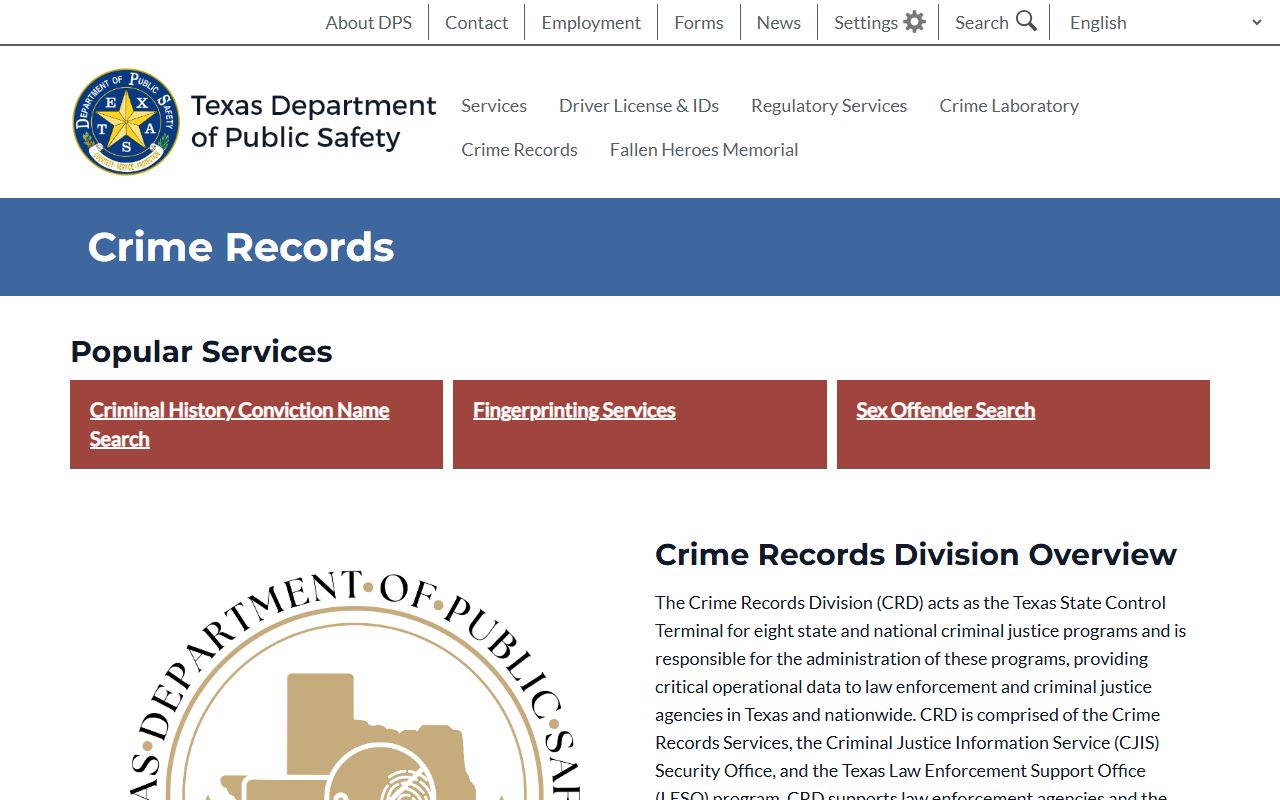
The CCH system captures felony records from all 254 counties and is the authoritative statewide source for criminal history information in Texas.
Note: For a complete picture of someone's Texas felony history, run a CCH name-based search through DPS and a court case search through re:SearchTX or the county District Clerk's portal.
How to Search Texas Felony Records Online
The DPS CRS portal is the official channel for statewide criminal history. You set up a free account, buy search credits, and then run searches by first and last name plus a partial date of birth. Under Texas law, deferred adjudication and conviction records are both public information. The CCH data includes arrests, prosecutions, and case dispositions for Class B misdemeanor and higher offenses. Name-based information is not an exact search. If a name is common, you may get multiple results. For a true identification match, a fingerprint search through Fingerprint Applicant Services of Texas (FAST) is the better option. Visit dps.texas.gov to start.
re:SearchTX at research.txcourts.gov is operated by the Texas Judicial Branch and pulls live data from court systems across all 254 counties. You can search by Cases, Filings, Text within documents, or Hearings. Results show party names, case status, upcoming hearing dates, and docket entries. Data refreshes nightly and is not real-time. Click a case description to open the Case Details page. You can also set up case alerts to track ongoing felony cases. Registration uses your existing eFileTexas credentials or you can register on the site.
For a basic felony case search you typically need:
- The person's full legal name
- A date of birth or approximate year
- The county where the case was filed, if known
- A case or cause number, if you have it
Larger counties run their own public portals with more detail than the statewide systems offer. Harris, Dallas, Bexar, Tarrant, Travis, and El Paso all have their own case search tools. These portals often show docket entries, scheduled hearings, and current case status in near real-time. Links to county-level portals are on each county page in this guide. For counties without their own tools, re:SearchTX or an in-person visit to the District Clerk is the way to go.
The re:SearchTX portal gives access to court case information from all 254 Texas counties through a single statewide search interface.
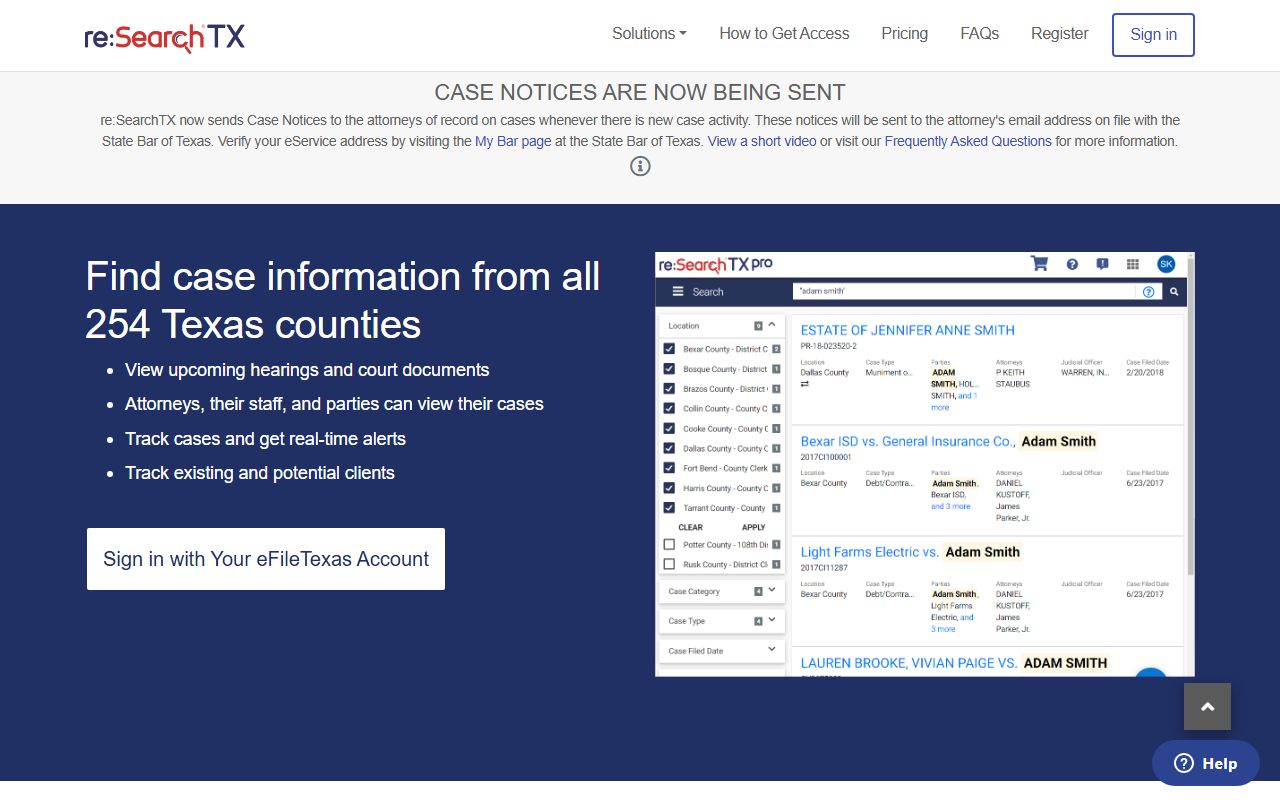
The portal is free to use for basic case lookups and covers all Texas district courts, including those that handle felony criminal cases.
The Texas Courts Case Search page is a direct lookup tool for individual felony cases by name or cause number across participating court systems.
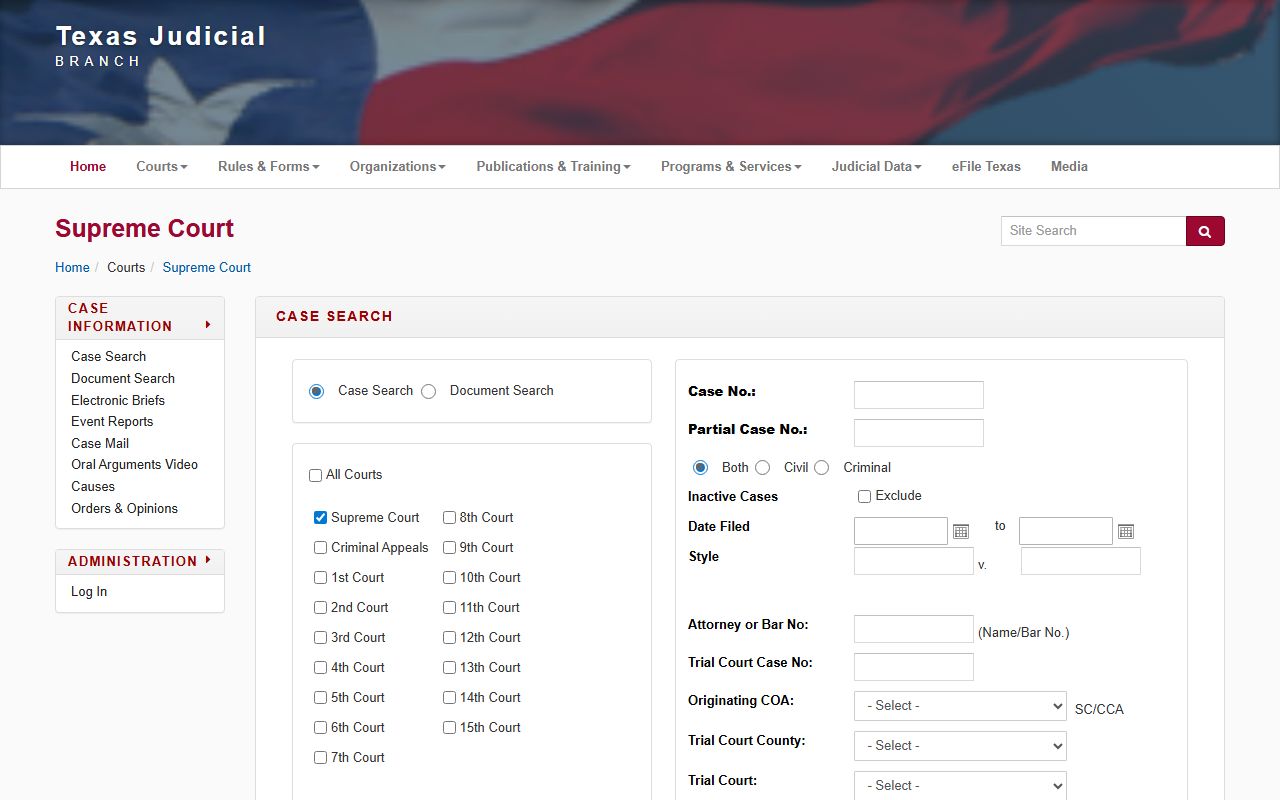
Use this tool when you have a specific name or cause number and want to go directly to a case without browsing a full docket.
Texas Felony Classifications and Penalties
Texas Penal Code divides felonies into five levels. Each level sets a different range of punishment, and the classification appears on all court records, charging documents, and criminal history reports.
Capital felonies are the most severe. They carry life without parole or the death penalty. First-degree felonies carry five to 99 years or life in the Texas Department of Criminal Justice, plus a fine of up to $10,000. Second-degree felonies carry two to 20 years and up to $10,000. Third-degree felonies carry two to 10 years and up to $10,000. State jail felonies sit below the third-degree level and carry 180 days to two years in a state jail facility. These are not served in a regular TDCJ prison unit. Under Texas Penal Code Section 12.44, a court may reduce a state jail felony sentence to Class A misdemeanor punishment after considering the gravity of the offense and the offender's history. This reduction is a discretionary decision for the judge.
The Texas Statutes website maintained by the Legislature is the official source for the Penal Code, the Code of Criminal Procedure, and all other statutes that govern felony cases in Texas.
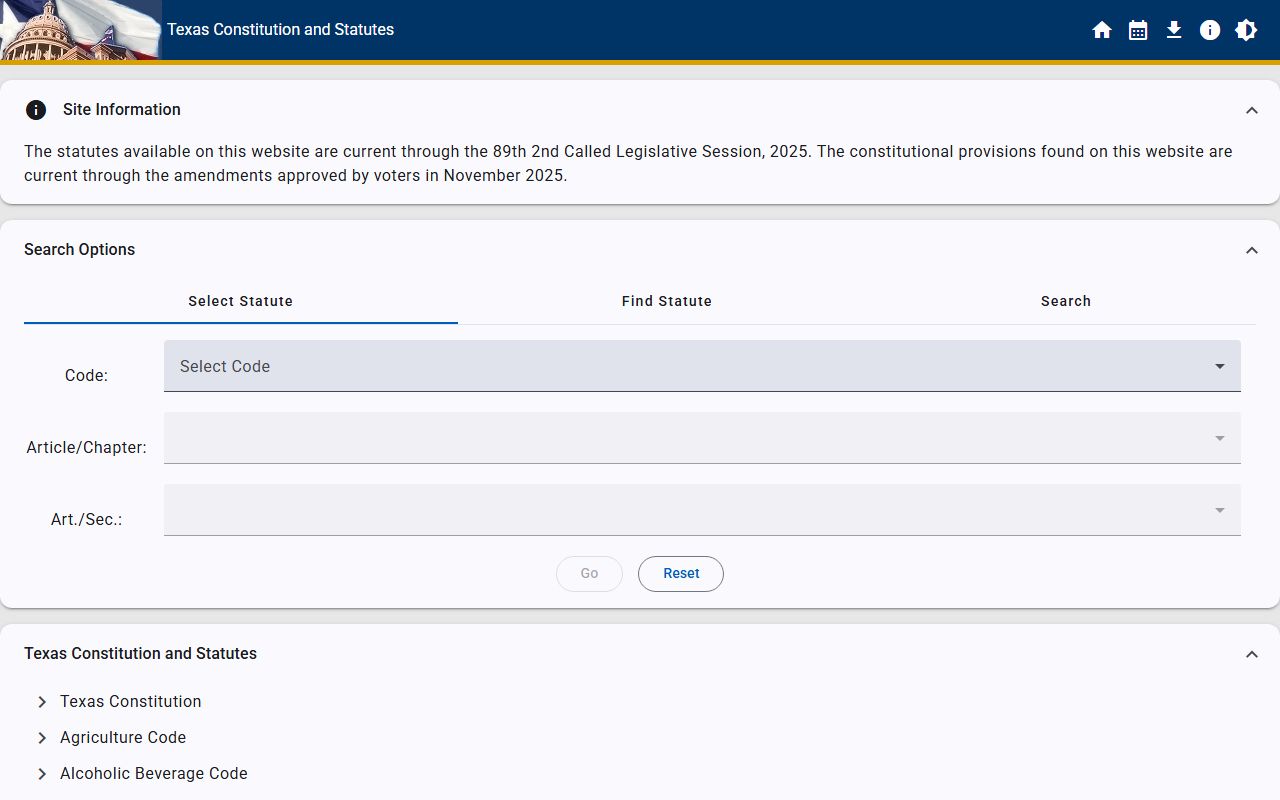
The full text of the Texas Penal Code, including all felony degree definitions and penalty ranges, is available free of charge on this site.
A Texas felony record shows both the charged offense and the final disposition. The disposition tells you how the case ended: conviction, acquittal, deferred adjudication, dismissal, or nolle prosequi (case dropped by the prosecutor). Deferred adjudication is when the court puts the case on hold after a guilty plea. If the person completes the conditions of their supervision, no conviction is entered on the record. However, the arrest and the deferred status still appear in the CCH system. Under Texas Government Code Chapter 411, Subchapter F, authority for access to individual criminal history data is defined along with which agencies and persons may obtain it. Deferred adjudication records are public information under Texas law, not private.
TDCJ Offender Search and Prison Records
The Texas Department of Criminal Justice provides a public offender search tool that lets you look up anyone sentenced to state prison or placed on state supervision for a felony. The system covers felony offenders sentenced to the Department of Corrections and is not limited to people currently incarcerated. Prior offenses and related crimes such as attempts, conspiracies, and solicitations also appear in the records. Each offender profile shows the TDCJ number, race, gender, date of birth, current facility location, projected release date, and current and prior offenses. You can search by name, TDCJ number, or State ID number at offender.tdcj.texas.gov.
TDCJ also maintains death row records that are fully public. The death row roster includes offenders currently sentenced to death, with individual profiles that summarize the crimes and include details of the case. The database also includes scheduled execution dates, historical execution data going back to 1923, and demographic information about death row offenders by gender and race. County of conviction information is also available. This data reflects the most serious class of Texas felony records and is updated on a regular basis by TDCJ staff.
The Texas Department of Criminal Justice homepage connects you to the offender search, inmate information, and supervision records for all state-level felony cases in Texas.

TDCJ's online tools give the public direct access to information about incarcerated felony offenders without any account or fee requirement.
The TDCJ death row page is a detailed public record of capital felony cases in Texas, including historical data and current rosters.
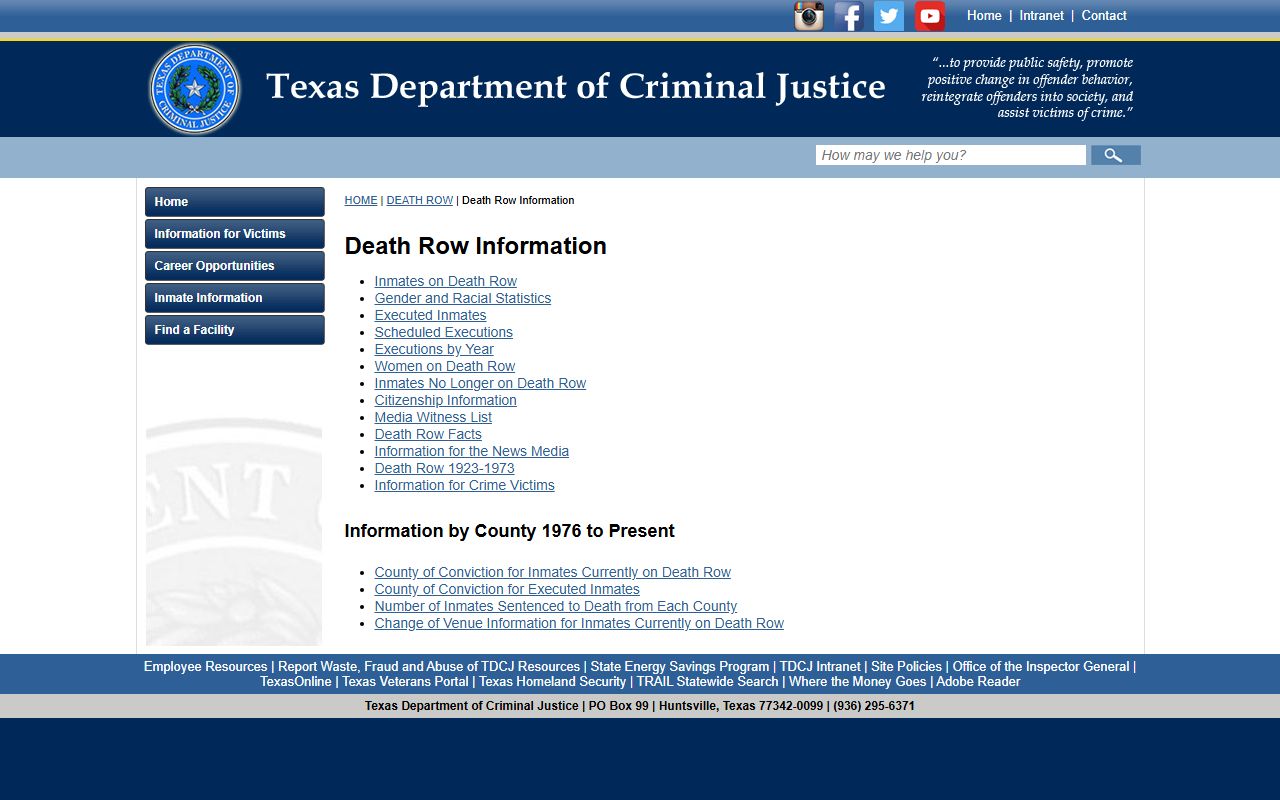
Death row records in Texas are among the most detailed publicly available felony records in the state, with individual profiles going back nearly a century.
Texas Sex Offender Registry
The Texas Department of Public Safety maintains the statewide sex offender registry under Texas Government Code Chapter 62. The registry includes offenders convicted of qualifying sex offenses since January 1970. Search options include name, address, city, county, zip code, and proximity to a specific location. Each record shows the offender's name, date of birth, physical description, current address, offense details, and risk level assessment. Failure to register as required is itself a felony offense in Texas. The registry is updated regularly by local law enforcement agencies who are responsible for registering offenders and verifying their addresses. To search, visit sor.dps.texas.gov.
The Texas Sex Offender Registry provides location-based search tools for finding registered sex offenders across all 254 counties.
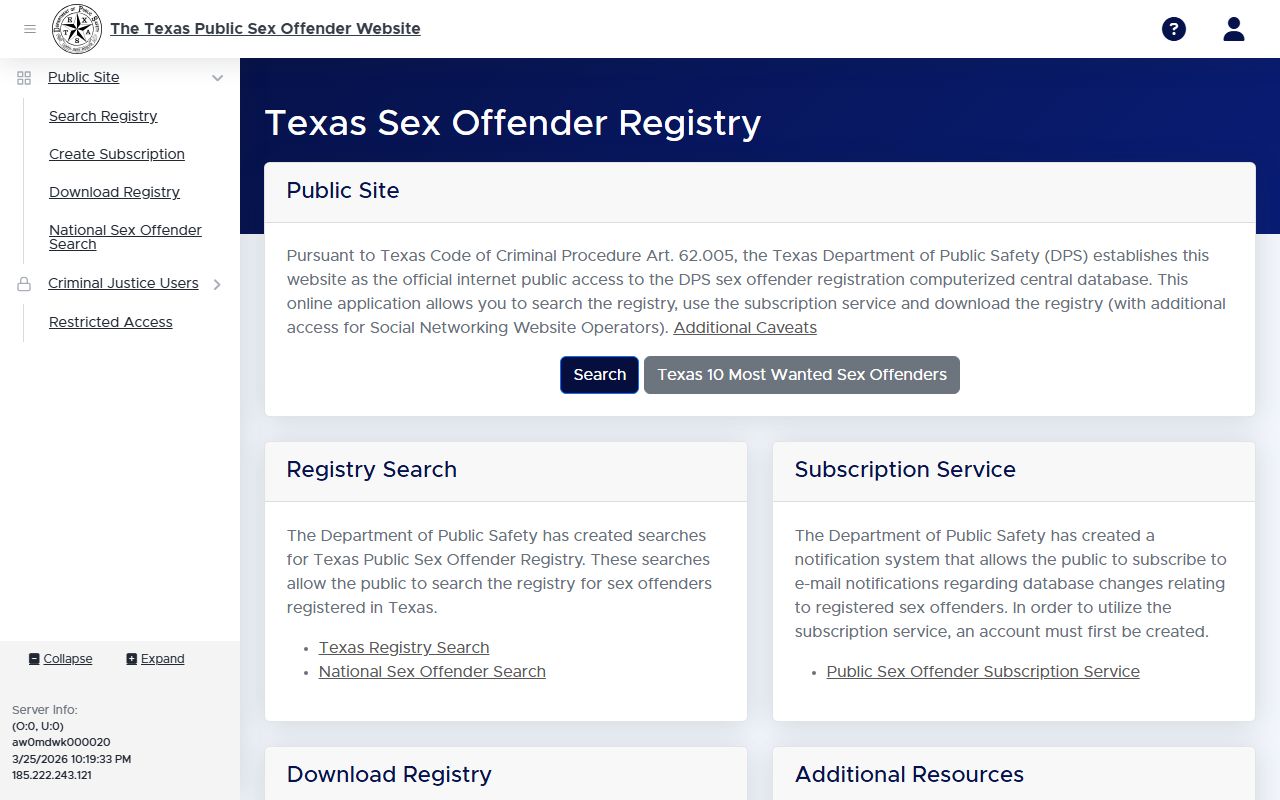
The DPS registry is one of the most detailed public records databases in Texas and is accessible to anyone without an account or login.
Public Access to Texas Felony Records
Court records in Texas are public under Texas Government Code Chapter 552, the Texas Public Information Act. The Act says all government information is presumed to be available to the public. You do not have to explain why you want a record. You do not need to be a party to the case. Governmental bodies must respond to records requests within ten business days and must submit any disputed records to the Attorney General within 15 business days. The Act covers both agency records and judicial records kept by government offices.
The Texas Attorney General's Office oversees compliance with the Public Information Act statewide. The Open Government Hotline at (877) OPEN-TEX answers questions about access to records. The AG's office reviews disputes when a government body claims an exception applies. The website at texasattorneygeneral.gov/open-government provides access to AG opinions, formal Open Records Decisions, and informal letter rulings dating back to 1989. These decisions are useful when a clerk denies a records request you believe should be granted.
Criminal history information held by DPS has its own rules under Texas Government Code Chapter 411, Subchapter F. Some types of records are restricted to law enforcement, prosecutors, and certain licensed agencies. Conviction records and deferred adjudication records are public. The Office of Court Administration publishes annual statistical reports on felony case filings and dispositions, broken down by degree and offense type, at txcourts.gov/oca.
The Texas Attorney General's Office is the state authority on public records access and resolves disputes when government bodies refuse to release records.

The AG's office maintains one of the largest libraries of open records opinions in the country and provides free guidance for anyone requesting Texas government records.
The Open Government section of the AG's site includes the full text of the Public Information Act and all formal Open Records Decisions you can use to support your request.

Open Records Decisions issued by the AG are binding on government bodies and are searchable by topic and agency type on this page.
The Texas Office of Court Administration tracks felony case statistics for all district courts and publishes reports that break down convictions, acquittals, and dismissals by county and offense type.
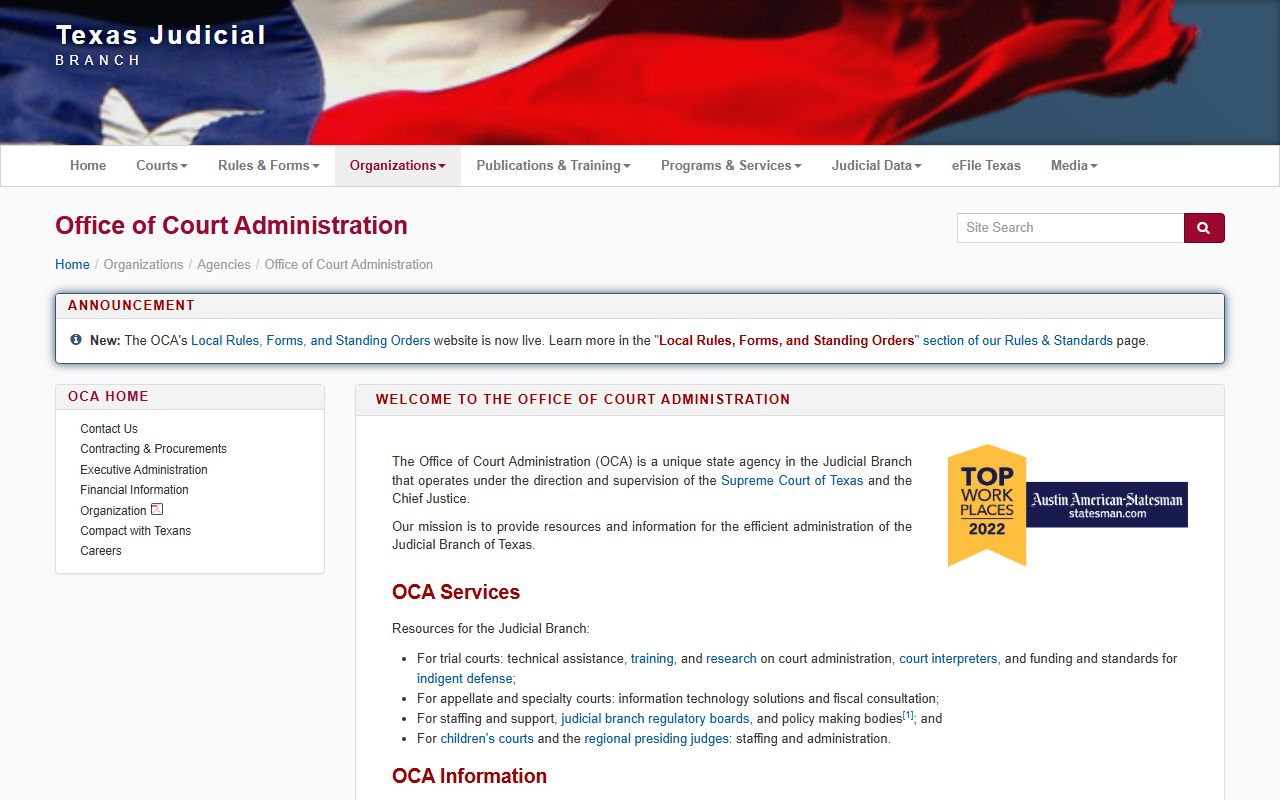
OCA annual reports show how many felony cases each county processed each year, including breakdowns by offense category and case disposition.
Expunctions and Nondisclosure Orders in Texas
Texas law provides two main ways to clear a felony record. The first is expunction under Texas Code of Criminal Procedure Chapter 55. An expunction destroys the arrest record and removes it from all government databases, including the DPS CCH system. It applies to arrests that did not lead to conviction, cases where the person was acquitted at trial, and certain pardoned offenses. After a court grants an expunction, the person can legally deny that the arrest ever happened. Not all felony arrests qualify. The law has strict eligibility rules based on how the case ended and what charges were filed.
The second option is an order of nondisclosure under Texas Government Code Sections 411.071 through 411.081. A nondisclosure order seals the record from public view but does not destroy it. Law enforcement still has access. These orders are available for some deferred adjudication cases after the supervision period ends and a required waiting period passes. Not all offenses qualify. Courts must find that granting the order is in the best interest of the public. Some violent offenses and certain felonies are excluded entirely. The Texas State Law Library maintains a guide on both processes with forms, eligibility rules, and step-by-step instructions at guides.sll.texas.gov. The guide also covers related topics such as name-based versus fingerprint searches and how to correct errors in a criminal history record.
Texas Judicial Branch and Court Resources
The Texas Judicial Branch website at txcourts.gov is the central hub for information about the state court system. It links to all 254 county court systems, explains how district courts work, provides access to re:SearchTX, and lists forms for people handling their own cases. The site also covers specialty courts such as drug courts, veterans courts, and mental health courts, many of which handle cases involving felony charges and alternative sentencing programs.
The Texas Judicial Branch homepage is the main entry point for all state court information and connects users to the re:SearchTX portal covering all Texas district courts.

The site includes links to court rules, standardized forms, and the annual statistical reports maintained by the Office of Court Administration.
Note: Texas Commission on Jail Standards at tcjs.state.tx.us maintains a directory of all 254 county jails where pretrial felony detainees are held before their cases are resolved.
Browse Texas Felony Records by County
Every one of Texas's 254 counties has a District Clerk who handles felony case files. Pick a county below to find local contact info, court portals, and resources specific to that area.
Texas Felony Records in Major Cities
Residents of major Texas cities file felony cases through the District Court in their county. Pick a city below to find where to go for felony records in that area.