
Rains County Felony Records
Rains County felony records are kept by the District Clerk's office in Emory, Texas. The clerk maintains all criminal case files for felony charges filed in the district court that serves this small East Texas county. You can look up case information in person at the courthouse, use statewide online tools, or submit a written request. Rains County sits northeast of Dallas and covers roughly 232 square miles. If you need to find out about a pending case, check a past conviction, or get a copy of a court document, this page walks you through the main ways to do that.
Rains County Overview
Rains County District Clerk
The Rains County District Clerk's office is located at the Rains County Courthouse in Emory, Texas. The clerk handles all felony criminal case filings for Rains County, including indictments, revocations, and expunction petitions. Staff can pull case records, give you copies of documents, and accept new filings. Call ahead to confirm hours and fees before visiting.
Rains County is served by the 8th Judicial District, which also covers Hopkins and Delta counties. The district court judge handles all felony matters that come through the county. Because Rains is a small county, the office staff is lean. Most requests can be handled the same day if you arrive in person with the correct information. Having a case number or the full name of the defendant speeds things up.
Under Texas law, the standard copy fee is $1 per page. Certified copies carry an additional $5 fee per document. Credit and debit cards may be accepted, but it is worth calling ahead to confirm payment options. Cash is always accepted at the clerk's window.
The Rains County official website provides contact information for county offices including the District Clerk.
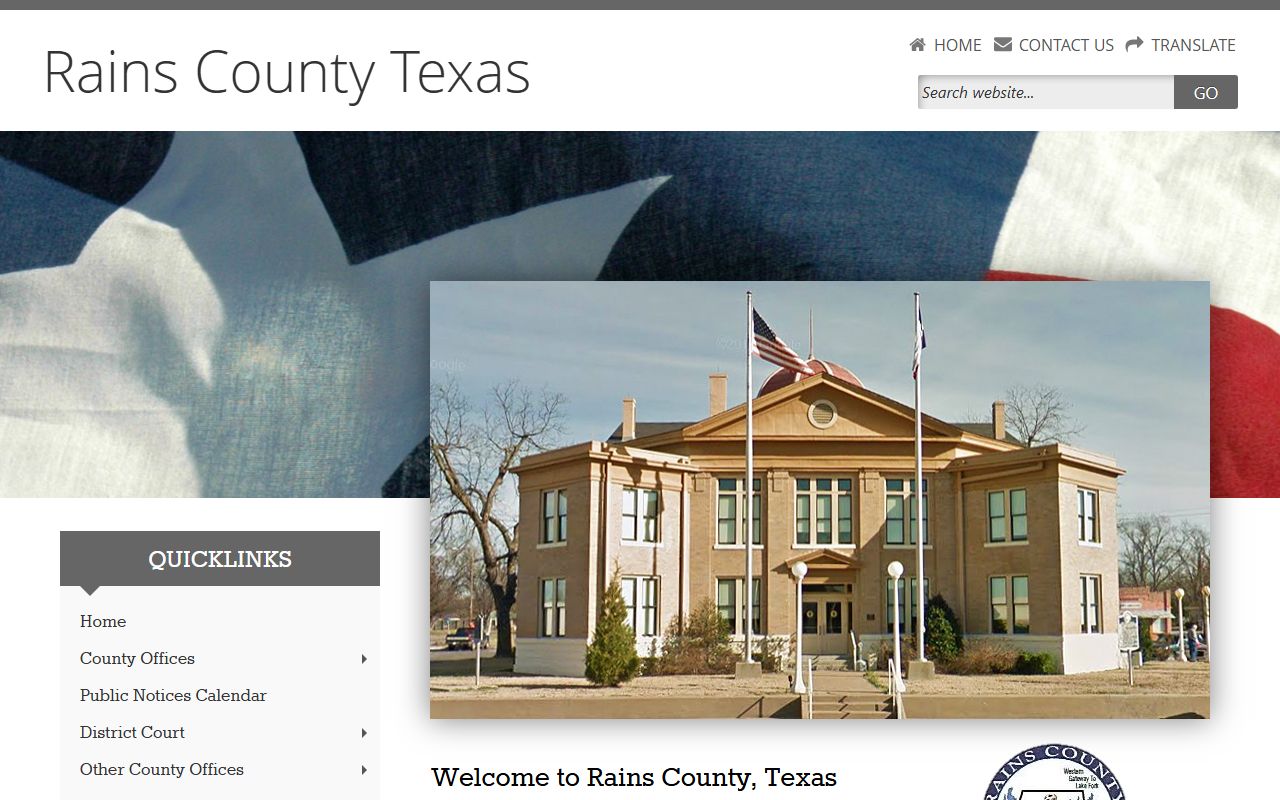
The county website lists office contacts, hours, and links to key public services for residents and researchers.
Felony Cases in Rains County Courts
All felony criminal cases in Rains County go through the district court. The court has jurisdiction over capital felonies, first-degree felonies, second-degree felonies, third-degree felonies, and state jail felonies. Under the Texas Penal Code, those levels break down like this:
- Capital felony: life in prison or death penalty
- First-degree felony: 5 to 99 years or life
- Second-degree felony: 2 to 20 years
- Third-degree felony: 2 to 10 years
- State jail felony: 180 days to 2 years in a state jail facility
Every case at each level is filed with and indexed by the District Clerk. That means if you want to look at a criminal case history for someone in Rains County, the District Clerk holds those files. Cases from prior years may be in storage but can still be retrieved on request. The clerk can tell you what years are available and what records may have been transferred to archival storage.
The district court also handles deferred adjudication cases. Under Texas law, a judge can defer a finding of guilt and place a defendant on community supervision. If they complete it successfully, a conviction never enters the record. But the arrest and charge remain on the criminal history unless the person gets an order of nondisclosure.
Note: District court dockets are public record in Texas. Anyone can view a pending case's scheduled hearings through the District Clerk's office or through re:SearchTX.
Searching Rains County Felony Records Online
The main statewide tool for searching Rains County felony records online is re:SearchTX, the official court records portal run by the Texas Judicial Branch. It covers all 254 Texas counties. You can search by name, cause number, or attorney. Basic case lookups are free. Viewing actual documents may require creating an account and purchasing access.
re:SearchTX lets you track active cases, see hearing dates, and review case histories without visiting the courthouse. Data is refreshed nightly, so it may not show same-day filings. For the most current status on an active case, a phone call to the District Clerk's office is more reliable. The system does not guarantee real-time accuracy.
For a broader criminal history check that pulls from all counties in Texas, the Texas DPS Crime Records Service offers name-based searches for $3 per search. You will need a CRS Public Website Account to run searches. Fingerprint-based checks are more accurate and can be arranged through DPS-authorized providers. Name-based results can return multiple matches and should be verified.
The TDCJ Offender Search shows current and past state prison inmates. If a person was convicted of a felony in Rains County and sentenced to state prison, they may appear here. You can search by name or TDCJ number and see facility, offense, and release date information.
Rains County Sheriff and Law Enforcement Records
The Rains County Sheriff's Office is the primary law enforcement agency in the county outside of the city of Emory. The sheriff's department makes arrests, executes warrants, and maintains a county jail for pretrial detainees facing felony and misdemeanor charges. After arrest, felony defendants appear before a magistrate for initial hearings and bond setting before their cases move to district court.
Arrest records and incident reports from the Rains County Sheriff are separate from court records. If you want an arrest report or incident report, you contact the sheriff's office directly. Those records fall under the Texas Public Information Act, Government Code Chapter 552. The agency must respond to written requests within 10 business days.
The Emory Police Department handles calls within the city limits. For incidents that occurred in the city, you would request reports directly from EPD. For incidents in unincorporated Rains County, the sheriff's office is the right contact. Either way, these records are separate from the court case file held by the District Clerk.
The Texas Sex Offender Registry is searchable by county and includes all registered sex offenders in Rains County. The registry is run by DPS and is updated regularly by local law enforcement.
Public Information Requests in Rains County
Texas gives the public broad access to government records under the Public Information Act. This law is codified at Government Code Chapter 552. It applies to all county offices including the District Clerk, County Clerk, and Sheriff. Under this law, government information is presumed public unless a specific exemption applies.
To request records from a Rains County office, submit your request in writing. You can mail it, email it, or deliver it in person. The office has 10 business days to respond. If they need more time or want to seek a ruling from the Texas Attorney General, they must notify you within that window. The Texas AG's Open Government page has guidance and templates for submitting requests.
Some records are confidential by law. Juvenile records, sealed cases, and expunged files are not public. A court order is required to access those records. Under Government Code Chapter 411, the state regulates who can access detailed criminal history information from the DPS system, which is separate from the court records held at the county level.
Note: If you believe a records request was wrongly denied, you can request a ruling from the Texas Attorney General's Office. The Open Government Hotline is (877) OPEN-TEX.
Expunctions and Record Clearing in Rains County
Texas law allows some people to clear their criminal records. The main legal tools are expunction and orders of nondisclosure. Expunction is the stronger option. It lets a person legally say they were never arrested for or charged with the offense. It covers cases that were dismissed, resulted in acquittal, or were no-billed by a grand jury. The rules are in Chapter 55 of the Texas Code of Criminal Procedure.
Orders of Nondisclosure are available for certain deferred adjudication cases. They do not erase the record entirely but seal it from public view. This means most employers and members of the public cannot access it, though law enforcement agencies still can. Eligibility depends on the offense type, waiting periods, and whether the person met all supervision requirements. A lawyer can help you figure out if you qualify.
To file for either remedy in Rains County, the petition goes to the district court that handled the original case. The District Clerk can provide the required forms. There is a filing fee, and the court will set a hearing date. The county attorney or district attorney may oppose the petition depending on the facts of the case.
Statewide Resources for Rains County Cases
Beyond what the county offers, several state agencies maintain records that relate to Rains County felony cases. The Texas Office of Court Administration publishes annual statistical reports on criminal caseloads for all Texas courts, including Rains County's district court. These reports break down case filings by felony level and show how cases were resolved.
The Texas State Law Library's criminal records guide is a free resource for anyone trying to understand how the Texas court system works. It covers everything from how to find court records to how to read a criminal history report from DPS. It is especially useful if this is your first time navigating the system.
The Texas Attorney General's Office oversees public records law in the state. If you run into trouble getting records from any Rains County office, the AG's Open Government division can provide guidance or take a formal complaint. Their resources are free and available to the public.
The Texas statutes database lets you look up the full text of any law referenced in court documents. It is a useful tool if you want to understand what charges mean and what penalties apply.
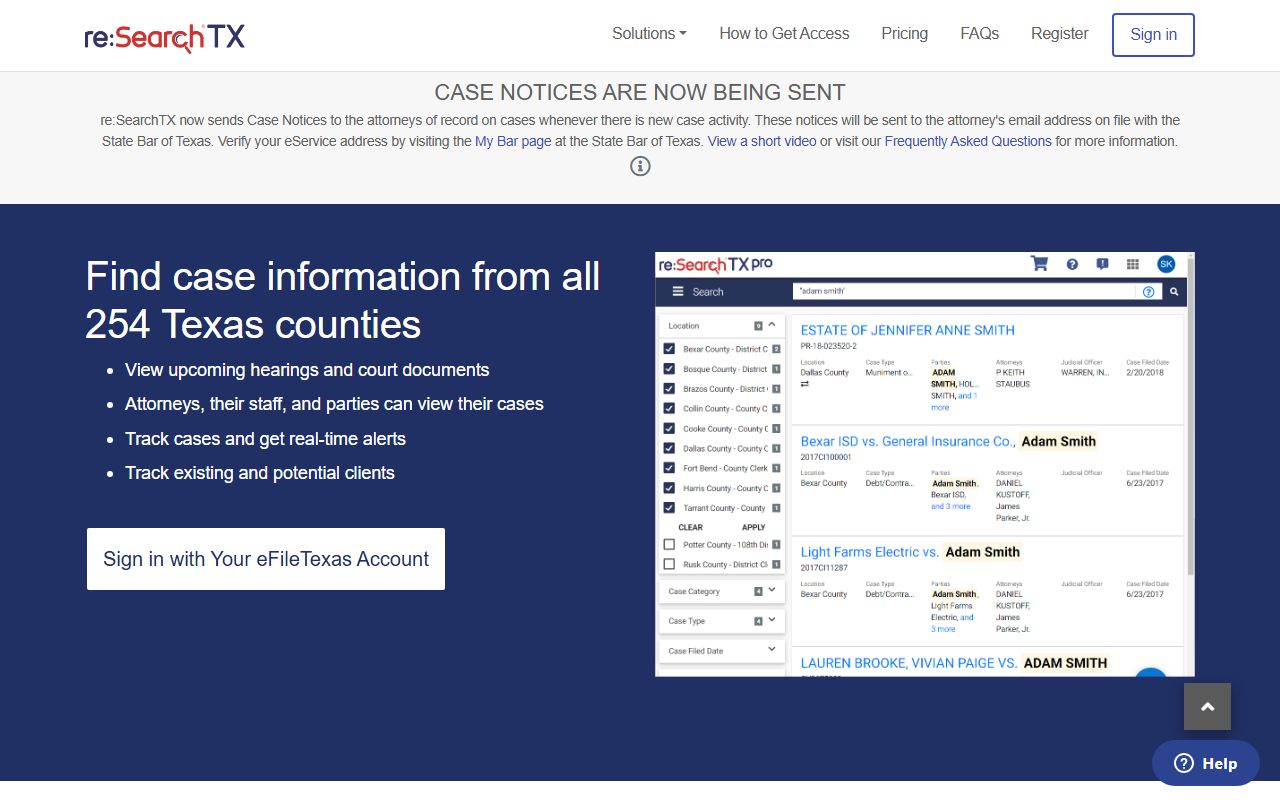
re:SearchTX covers all 254 Texas counties and is the primary online tool for searching Rains County felony court records.
Nearby Counties
Rains County borders several other Northeast Texas counties. Felony records for those areas are held by their own district clerks.